

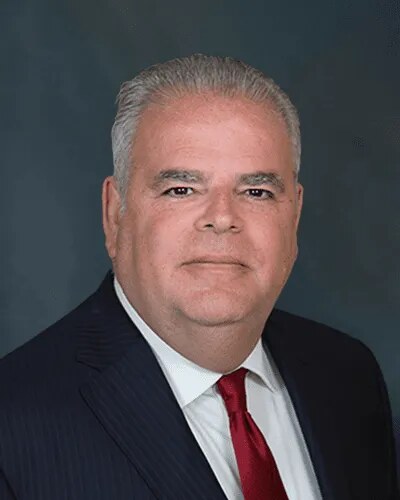

Sander J. Ressler, Managing Director of Essential Edge Compliance Outsourcing Services, presented this branch office inspections webinar with Spenser Rubin, Senior Product Manager at RegEd, Inc.
Internal Inspections: FINRA Rule 3110
Conduct a review, at least annually (on a calendar-year basis). The inspections shall:
- be reasonably designed to assist the member in detecting and preventing violations of, and achieving compliance with, applicable securities laws and regulations, and with applicable FINRA rules;
- inspect activities of each office, including the periodic examination of customer accounts to detect and prevent irregularities or abuses;
- retain a written record of the date upon which each review and inspection is conducted.
Based on data available as of October 2017, firms conduct approximately 86,500 on-site inspections annually, of which approximately 21,000 are for OSJs or supervisory branch offices and approximately 65,500 are for non-supervisory branch offices and non-branch locations. (Source: FINRA)
Note: This excludes offices of convenience, which should be reviewed periodically.
Background of Branch Inspections
Branch Inspections: Historical Context
After the introduction of IBDs to the industry in the early 1980s, the requirement for conducting branch inspections was important because RRs had the ability to send funds and applications directly to mutual fund and variable annuity issuers without sending paperwork to the home office for supervision and record keeping. In many ways, branch inspections were the only windows into the conduct of a RR.
In the past 10 years, imaging workflow has eliminated the issue of applications being submitted directly to product issuers. Firms now see all transactions conducted by their RRs.
What are we looking for in today’s branch inspections?
- Selling away
- Pre-signed forms
- Improper relationships
- Undisclosed Outside Business Activities
- Ineffective cybersecurity
- Client privacy issues (electronic and hard copies must be secure)
What do these issues all have in common? They will not be detected in a remote inspection.
Inspection Cost Limitations
- Salaried Employees
- Travel Time
- Supervision Cost
- Accounting Cost
- Follow Up
- Training
How do you conduct a thorough inspection in the face of these costs?
Preparation: by the Home Office
The following should be made available to reviewer prior to the inspection:
- Occupants of the branch office
- Product mix of the RRs in the office
- Commissions earned over the past 12 months
- Summary of customer complaints since last inspection
- Deficiency letters from prior inspections
Preparation: by Examiner
The following should be performed by the reviewer prior to the inspection:
- Internet Search
- Google name of all branch personnel, all DBAs and all disclosed OBAs
- Search Facebook, Twitter, LinkedIn and Instagram
- Search branch website, if any
- Email search for OBAs and keywords
Preparation: Schedule an Inspection
- An inspection should take 2-3 hours for a branch office with 1-2 RRs
- Do not schedule more than 2-3 branch inspections in a day
- Schedule 2-3 weeks in advance for announced inspection
- All PICs and RRs should be present to answer questions during the inspection
Preparation: Conducting the Inspection
Who should conduct the inspection?
- Experience vs. inexperience: Send an examiner with experience who possesses at least a Series 7
- Sending an OSJ or his/her delegate to conduct an inspection provides little protection; they have little/no training and they have a conflict of interest
- Do not have the same examiner inspect an office 3 years in a row
Getting Started: The Inspection
- Photos of the building directory
- Photos of door
- Photos of SIPC and BD signage
- Photos of the internal office structure and layout
- Photos of external signage, if any
Getting Started: The Questionnaire
- Stop asking “airline” questions; save them for the ACQ
- Stop looking at random customer files and reviewing transactions, what do you expect to find?
- Review customer files for pre-signed forms
- Open every drawer and office doors
- Get details on office sharing, if any
- Be aware of sharing mailboxes and/or office addresses
- Verify that all computers are secure
- Verify that WiFi is secure
- Verify that anti-virus software is up-to-date
- Copy of IT contract, as applicable; review for confidentiality clause
- Verify "clean desk" policy (i.e. cleaning crew access may be an issue)
Getting Started: Workpapers
- Business cards, letterhead and fax cover sheet
- OBA 1099s
- Bank statements
- Evidence of deposits of more than $1,000 when the funding source is not clear
- Brokercheck (detailed report)
- Check, transaction and gift logs
- Office sharing agreements, if any
- Cyber security: How are computers protected?
- Anti-viral software
- Personal e-mail (or any email not captured by BD)
- IT vendor contracts
- Client notes thru CRM
- Business continuity plan
- OSJs: Signature Guarantee Log and RR files
- IARs: ADV Part 2B
- Independent RIAs: Advisory service agreements
- Recommended: Credit Reports
Ongoing Impacts of Covid-19 on Branch Inspections
FINRA Approves Remote Inspections
FINRA recently issued a new rule (2020-040) to allow remote inspections for 2020 and 2021.
Pros:
- Better Staffing Allocation
- Cost Savings Due to Lack of Travel
Cons:
- No Unannounced Visits
- Increased Risk Exposure to the BD
- RRs Know You’re Not Visiting
- Increased Potential of Selling Away or Other Violations
Accelerated schedule beyond 2021? Do you want to wait 5-6 years to be on-site?
Changes in the Wake of Covid-19
- Have you revised your WSPs to reflect remote reviews in 2020/2021?
- Should you request photos or video footage?
- Are you modifying your heightened supervision plans?
- Are your workpapers being securely transmitted?
- Are you modifying your questionnaire to reflect the exclusion of on-site visits?
Do Remote Reviews Cut Costs?
- Heightened supervision plans in 2021?
- Accelerated number of reviews in 2022?
- Accelerated percentage of unannounced visits in 2022?
- Risk-based schedule?
Originally presented as a RegEd webinar, August 3, 2021. Download the slides