

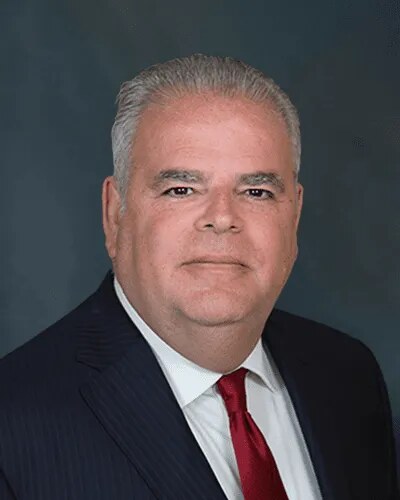

Sander J. Ressler, Owner and Managing Director of Essential Edge Compliance Outsourcing Services, presented this session at the V.I.S.I.O.N. Conference on September 13, 2025.
We Are All Living Longer
- Life expectancy in 1900 was 46
- 1950 it was 66
- 2014 it was 78
- In 2005 there were 67,000 centenarians
- By 2040 expect over 500,000
We are an Aging Population
- In 2020, about 1 in 6 people in the U.S. were age 65 and over, up from less than 1 in 20 in 1920
- By 2060, 1 in 4 Americans are projected to be over 65
- By 2030, 73 million people in America are projected to be over 65
- By 2034, more Americans are projected to be over 65 than people under 18. (AARP)
The Curse of Living Longer
- The greater your assets, the better medical care available to you
- The better your medical care, the greater opportunity for longevity
- Longevity is both a benefit and a curse; you are more apt to tax your savings and are at greater risk of experiencing progressive degenerative mental capacity
- Longevity also introduces isolation and independence as risk factors
Seniors’ Preferences for Independence
- Intend to continue living in their own home: 77%
- Prefer to live alone: 53%
- Expect to live alone: 77%
Senior Isolation
- Social isolation ranges from isolation that is imposed (involuntary) to voluntary isolation.
- A 2009 study suggests that involuntary isolation is considered negative because it results in a loss of social intercourse and the support it provides to the individual or their support systems.
- Further, a more recent study found that social isolation, regardless of cause, was common among elderly victims of financial abuse and exploitation.
Diminished Capacity
- Diminished capacity is when your client loses freedom of movement, the ability to perceive their surroundings, cognitive function, or any combination of these traits
- Mental impairment is often difficult to recognize, particularly in the early stages and can change daily
- A client may seem perfectly normal most of the time; however, his or her ability to effectively read and understand account-related documents may be greatly diminished
Dementia and Its Detectable Signs
Dementia is a serious loss of cognitive ability in a previously-unimpaired person, beyond what might be expected from normal aging.
Signs of dementia include:
- Confusion
- Unusual loss of memory
- Unkempt physical appearance
- Difficulty understanding basic financial concepts or inability to do menial financial tasks like balance their checkbook, etc.
- Refusal to listen to others or take the advice of others
Alzheimer’s is Prevalent and Increasing
- According to The National Institute on Aging, only about 5% of people age 65 to 74 have Alzheimer’s, while nearly half of those who are 85 and older may have the disease
- 50% of older adults with mild Alzheimer’s were fully incapable of making sound final decisions
- According to the Alzheimer’s Association, more than 6 million Americans are living with the disease and by 2050 the number could be as high as 16 million.
- Further, 1 in 3 seniors die with Alzheimer’s or some form of Dementia
Elder Financial Abuse
Elder financial abuse spans a broad spectrum of conduct, including …
- Taking money or property
- Forging an older person’s signature
- Getting an older person to sign over financial ownership via deed or granting power of attorney through deception
- Coercion/undue influence or perpetrating scams, other fraudulent or deceptive acts
- Family are 90% of perpetrators
While a financial adviser may not be initially aware of many of these situations, in most cases they will become aware when the assets they are advising become the targets.
Indeed, financial professionals often find themselves on the front lines as many of their client relationships span decades and they may be the first to recognize signs of diminished capacity and/or financial exploitation.
Unfortunately, many financial exploitation scenarios happen simultaneously with the onset of a debilitating disease or client incapacity.
Financial loss to senior adults is somewhere between $2.6 and $2.9 billion annually.
Signs of Financial Exploitation
- A new individual suddenly becomes involved in the client’s financial affairs
- The client gives a power of attorney to someone who seems inappropriate
- You are unable to speak directly with the client, despite attempts to do so
- The client appears to be suddenly isolated from friends and family
- The client’s transaction patterns undergo a sudden, unexplained or unusual change
- Unexplained disbursements outside of the norm show up in a client’s account
Signs of Financial Abuse
While financial advisors are not expected to be experts in diagnosing such impairments, they should note the observed behaviors:
Confusion, forgetfulness and/or incoherent speech are possible indications of an existing or developing mental impairment
Know and Protect Your Clients
- Clients may not acknowledge or be aware of their diminished capacity, or that they were victims of fraud or abuse
- Clients may be upset upon learning of any discussions with a third party
- Third parties, such as current or potential clients, may be upset about being contacted or not being contacted
- The subject matter is sensitive and requires a discussion with great care and discretion
Protect Your Practice
After observing possible incapacity or elder abuse activities, the Adviser shall thoroughly document all client meetings and/or phone calls and should NOT meet alone with the client.
The following are options that may be implemented at the Firm’s discretion:
- Suggest/require the attendance of the Trusted Contact, a family member and/or client advocate
- Require another firm representative to monitor or sit in on the meeting
Escalate Concerns
Once any suspicion of diminished capacity is detected, immediately escalate such concerns to your Compliance Department.
Provide full documentation of any meetings or other interaction with the client that prompted the concern of diminished capacity or elder abuse.
Legal Issues
- Privacy limitations versus legal risk for doing nothing
- Firm’s obligations on suspicious activity
- Some states mandate reporting of elder exploitation
Regulatory Focus
Amendments to FINRA Rule 4512 (Customer Account Information) require firms to make reasonable efforts to obtain the name of and contact information for a trusted contact person for a customer’s account.
Landmines (aka Litigation Risks)
Plaintiffs’ attorneys are likely to be a bigger concern than regulators
- Different incentives
- Disgruntled family members
- Ease of arbitration
- Sympathetic clients/absent clients
Children/family members who are the “Trusted Contacts” may likely be the exploiters
- 90% of elder abuse is by family members (according to the National Care Planning Council)
Even competent seniors can experience regret and shame. Their heirs to-be may (deceitfully) convince them they were exploited by the firm.
Risks From Temporary Hold | Rule, FINRA 2165
Rule 2165 provides that firms may place temporary holds, but if they do, they shall, among other things, create and retain records showing:
- the request(s) for disbursement that may constitute financial exploitation of a Specified Adult and the resulting temporary hold;
- the finding of a reasonable belief that financial exploitation has occurred, is occurring, has been attempted, or will be attempted underlying the decision to place a temporary hold on a disbursement;
- the name and title of the associated person that authorized the temporary hold on a disbursement;
- notification(s) to the relevant parties pursuant to paragraph (b)(1)(B) of the Rule; and
- the internal review of the facts and circumstances pursuant to paragraph (b)(1)(C) of the Rule.
These records will be discoverable.
Risk Implications of Rule 2165
If a firm considers a temporary hold but eventually determines the withdrawal is OK, claimants’ attorneys may allege that the same level of care must be applied for all subsequent withdrawals (because the firm is on notice there may be abuse).
If the firm does not consider a temporary hold, claimants’ attorneys may allege they missed several red flags (with 20/20 hindsight).
Since sales of securities cannot be delayed, the firm needs to sell the securities even if it delays the transfer. Will it be liable for market movements after the sale or tax consequences if the transfer does not happen?
What about damages to clients who do not get the funds on time (beds in good elder care facilities may have narrow windows to accept).
Summary
Ultimately, the goal of all financial services professionals should be to report crimes when they are initially suspected, such as an attempt to improperly access or use an older elders’ funds, and to allow law enforcement to promptly investigate and determine if charges against an alleged perpetrator are appropriate.
Conclusion
Our challenge: Working with clients with diminished capacity can be time intensive and emotionally taxing.
Our opportunity: Keeping clients out of harm’s way is simply the right thing to do. Financial professionals play a crucial role in preventing, identifying and protecting vulnerable clients from financial abuse.
Originally presented at the V.I.S.I.O.N. Conference, September 13, 2025. Download the slides